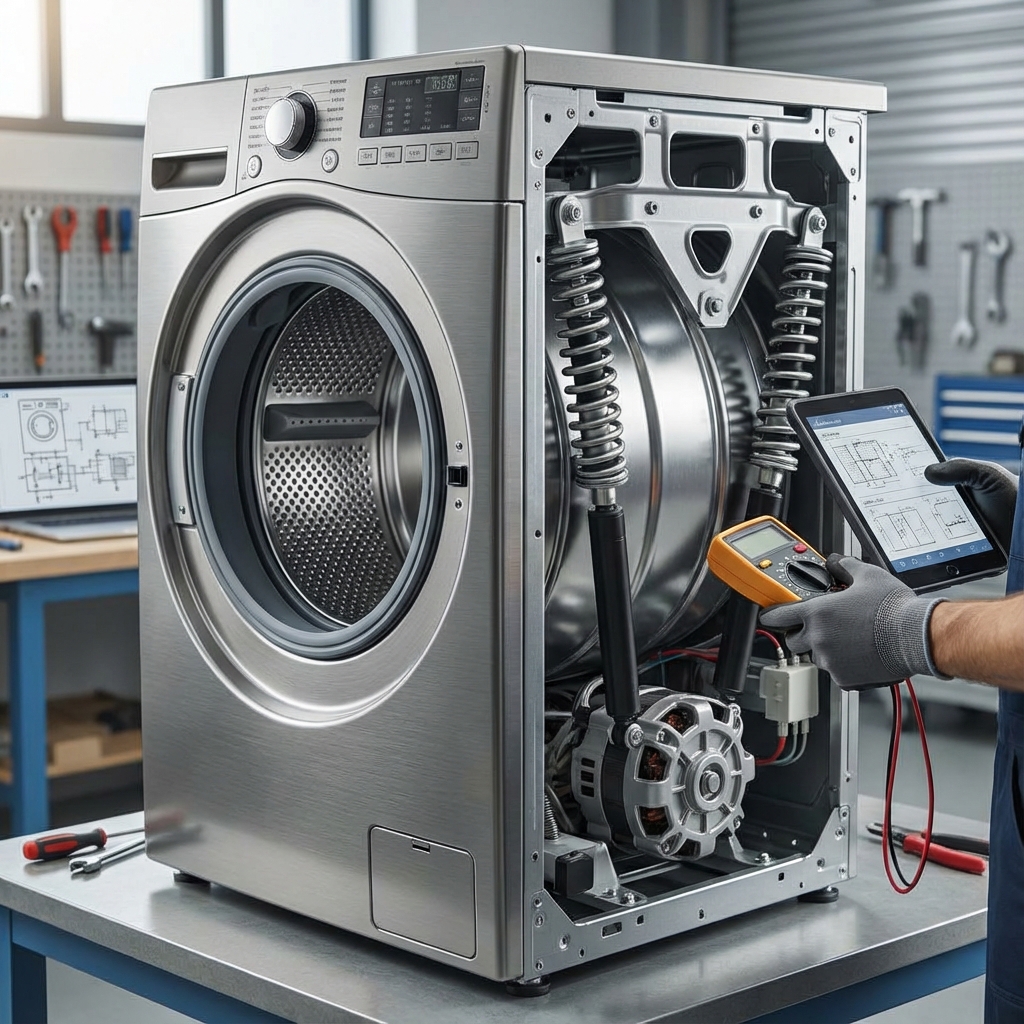
Washing Machine Noise Problems? Expert Noise Repair Toronto
Washing machine noise problems can disrupt household peace and indicate serious mechanical issues in Toronto homes. Noise issues typically result from worn bearings, unbalanced loads, loose components, or drive system problems that create grinding, banging, or squealing sounds. Understanding noise sources, identifying mechanical problems, and implementing professional repair solutions ensures your washing machine operates quietly and efficiently. Proper noise diagnosis and repair are essential for maintaining appliance performance and household comfort.
Quick Answer: Washing machine making loud noises? Professional noise diagnosis and repair service in Toronto. Expert solutions for grinding, banging, squealing sounds from JK Appliances. This is a common issue that can usually be resolved with proper troubleshooting. If the problem persists, professional diagnosis is recommended.
Understanding Washing Machine Noise Sources
COMMON NOISE TYPES AND CAUSES
Grinding and Scraping Noises
Mechanical wear sounds:
- Bearing failure: Worn drum bearings creating grinding sounds
- Drive belt problems: Frayed or misaligned belts causing scraping
- Pump issues: Damaged drain pump creating grinding noises
- Motor problems: Worn motor bearings or components
- Foreign objects: Items caught in drum or pump causing scraping
Banging and Thumping Sounds
Impact and vibration noises:
- Unbalanced loads: Clothes clumping causing drum imbalance
- Loose components: Unsecured parts banging during operation
- Suspension problems: Worn suspension springs or shock absorbers
- Installation issues: Improper leveling causing movement
- Drum problems: Loose or damaged drum components
Squealing and Screeching Noises
High-pitched mechanical sounds:
- Belt problems: Worn, loose, or glazed drive belts
- Motor issues: Motor bearing wear or lubrication problems
- Pulley problems: Worn or misaligned pulleys
- Brake problems: Worn brake pads or adjustment issues
- Bearing lubrication: Insufficient lubrication in moving parts
NOISE DEVELOPMENT PATTERNS
Operational Noise Patterns
When noises occur:
- Startup noises: Sounds during machine startup and initial operation
- Cycle-specific noises: Noises during specific wash or spin cycles
- Load-dependent noises: Sounds varying with load size or type
- Speed-related noises: Noises increasing with drum speed
- Intermittent noises: Occasional sounds during operation
Progressive Noise Development
How noises worsen over time:
- Gradual increase: Noises slowly becoming louder over time
- Sudden onset: Noises appearing suddenly after specific events
- Frequency changes: Noise pitch or frequency changing over time
- Duration extension: Noises lasting longer during cycles
- Multiple noise development: Additional noises appearing over time
Diagnostic Procedures
INITIAL ASSESSMENT
Noise Characterization
Noise evaluation process:
- Sound identification: Identify specific type and characteristics of noise
- Timing analysis: Determine when during cycles noises occur
- Location identification: Pinpoint noise source areas in machine
- Load dependency: Test noise variation with different load sizes
- Operational correlation: Correlate noises with specific machine functions
Visual and Physical Inspection
Preliminary examination:
- External inspection: Check for visible damage or loose components
- Leveling check: Verify proper machine leveling and stability
- Load assessment: Examine load distribution and balance
- Component inspection: Look for worn or damaged visible parts
- Installation verification: Check proper installation and connections
SYSTEMATIC DIAGNOSIS
Mechanical Component Testing
Detailed mechanical evaluation:
- Bearing testing: Check drum bearing condition and operation
- Drive system inspection: Examine belts, pulleys, and motor components
- Suspension testing: Test suspension springs and shock absorbers
- Pump examination: Inspect drain pump for damage or blockages
- Motor testing: Evaluate motor operation and bearing condition
Operational Testing
Dynamic noise diagnosis:
- Empty cycle testing: Run cycles without loads to isolate mechanical noises
- Load variation testing: Test with different load sizes and types
- Speed testing: Evaluate noises at different operational speeds
- Cycle testing: Test noises during different wash and spin cycles
- Component isolation: Test individual components to isolate noise sources
Advanced Diagnostic Techniques
Professional diagnostic methods:
- Vibration analysis: Measure vibration patterns and frequencies
- Sound analysis: Analyze noise frequencies and characteristics
- Component testing: Individual component testing and evaluation
- Alignment checking: Verify proper component alignment and positioning
- Wear assessment: Evaluate component wear and remaining life
Professional Noise Repair Solutions
BEARING AND DRIVE SYSTEM REPAIR
Drum Bearing Replacement
Bearing system restoration:
- Bearing assessment: Complete evaluation of drum bearing condition
- Bearing replacement: Install new drum bearings and seals
- Shaft service: Repair or replace drum shaft if damaged
- Alignment correction: Ensure proper drum alignment and operation
- Lubrication service: Proper lubrication of new bearing systems
Drive System Service
Drive component restoration:
- Belt replacement: Install new drive belts with proper tension
- Pulley service: Repair or replace worn or damaged pulleys
- Motor service: Motor bearing replacement and lubrication
- Alignment correction: Proper alignment of drive system components
- Tension adjustment: Correct belt tension and pulley alignment
SUSPENSION AND STABILIZATION REPAIR
Suspension System Service
Suspension component restoration:
- Spring replacement: Install new suspension springs
- Shock absorber service: Replace worn shock absorbers or dampers
- Mounting repair: Repair or replace suspension mounting points
- Balance restoration: Restore proper drum balance and stability
- Vibration elimination: Eliminate excessive vibration and movement
Installation and Leveling Service
Stability restoration:
- Leveling service: Proper machine leveling and adjustment
- Floor preparation: Address floor stability and vibration issues
- Mounting service: Secure proper machine mounting and positioning
- Isolation installation: Install vibration isolation pads or mounts
- Stability verification: Verify stable operation across all cycles
COMPONENT REPLACEMENT AND REPAIR
Pump and Motor Service
Major component restoration:
- Drain pump replacement: Install new drain pump assembly
- Motor replacement: Replace worn or damaged motors
- Pump alignment: Ensure proper pump alignment and operation
- Motor mounting: Secure motor mounting and vibration isolation
- Performance optimization: Optimize component operation for quiet running
Miscellaneous Component Service
Additional noise source repair:
- Foreign object removal: Remove objects causing noise and damage
- Component tightening: Secure loose components and fasteners
- Brake adjustment: Adjust or replace brake components
- Control system repair: Fix control systems affecting operation
- Safety system service: Ensure safety systems operate quietly
JK Appliances Noise Repair Service
EXPERT DIAGNOSIS AND REPAIR
Comprehensive Assessment
Professional noise evaluation:
- Complete noise analysis: Thorough noise source identification and assessment
- Mechanical evaluation: Detailed mechanical component inspection
- Root cause identification: Determine exact causes of noise problems
- Repair planning: Develop comprehensive noise elimination strategy
- Cost estimation: Transparent pricing for all repair options
Professional Repair Benefits
Expert service advantages:
- Experienced technicians: Specialized washing machine noise expertise
- Advanced diagnostic tools: Professional noise analysis equipment
- Quality parts: OEM and high-quality replacement components
- Warranty coverage: Comprehensive repair warranties
- Quiet operation guarantee: Ensure quiet machine operation
SERVICE COVERAGE
Toronto Area Service
Complete GTA coverage:
- Downtown Toronto: Financial District, Entertainment District
- North York: Willowdale, Don Mills, Thornhill
- Scarborough: Agincourt, Malvern, Rouge
- Etobicoke: Islington, Rexdale, Mimico
- York Region: Markham, Richmond Hill, Vaughan
Emergency Service Options
Urgent noise repair:
- Same-day service: Emergency noise repair available
- Priority scheduling: Urgent repair appointments
- Quick response: Rapid technician dispatch
- Immediate solutions: On-site repair completion when possible
Prevention and Maintenance
REGULAR MAINTENANCE SCHEDULE
Daily Operation Practices
Daily noise prevention:
- Proper loading: Distribute clothes evenly to prevent imbalance
- Load size management: Avoid overloading or underloading
- Foreign object check: Check pockets for items that could cause noise
- Gentle operation: Use machine controls gently to prevent damage
- Cycle completion: Allow cycles to complete properly
Weekly Maintenance
Weekly noise prevention:
- Leveling check: Verify machine remains properly leveled
- Component inspection: Check for loose or worn components
- Cleaning: Clean lint and debris that could cause noise
- Lubrication check: Check for adequate lubrication in accessible areas
- Operation monitoring: Listen for new or changing noises
Monthly Maintenance
Monthly care tasks:
- Thorough inspection: Complete visual and auditory inspection
- Component tightening: Tighten any loose fasteners or components
- Balance verification: Check drum balance and operation
- Suspension check: Inspect suspension components for wear
- Professional assessment: Schedule professional inspection if needed
USAGE BEST PRACTICES
Proper Loading Techniques
Load management for quiet operation:
- Even distribution: Distribute clothes evenly around drum
- Appropriate load sizes: Use proper load sizes for machine capacity
- Fabric mixing: Mix heavy and light items for better balance
- Delicate handling: Handle delicate items to prevent damage
- Load checking: Check loads during cycles if noise develops
Operational Best Practices
Operating practices for noise prevention:
- Cycle selection: Choose appropriate cycles for load types
- Speed selection: Use appropriate spin speeds for loads
- Regular use: Use machine regularly to prevent component stagnation
- Maintenance cycles: Run cleaning cycles to prevent buildup
- Professional service: Schedule regular professional maintenance
Troubleshooting Common Noise Issues
DIY NOISE DIAGNOSIS
Basic Noise Checks
User-level noise assessment:
- Load redistribution: Redistribute unbalanced loads
- Leveling check: Verify machine is properly leveled
- Foreign object check: Look for objects in drum or pump
- Component inspection: Check for obviously loose or damaged parts
- Cycle testing: Test different cycles to isolate noise sources
Simple Noise Solutions
Basic noise fixes:
- Load balancing: Redistribute clothes for better balance
- Leveling adjustment: Adjust machine feet for proper leveling
- Component tightening: Tighten accessible loose components
- Cleaning: Remove lint and debris that could cause noise
- Cycle modification: Use different cycles to reduce noise
WHEN TO CALL PROFESSIONALS
Professional Service Indicators
Signs requiring expert repair:
- Persistent loud noises: Noises continuing despite basic troubleshooting
- Grinding or scraping sounds: Mechanical wear noises indicating damage
- Sudden noise onset: New noises appearing suddenly
- Multiple noise sources: Noises from multiple machine areas
- Safety concerns: Any noises indicating potential safety hazards
Safety Considerations
Safety-related noise concerns:
- Mechanical damage: Noises indicating potential component failure
- Electrical issues: Noises combined with electrical problems
- Structural damage: Noises indicating machine structural problems
- Safety system activation: Noises triggering safety shutoffs
- Warranty protection: Maintaining manufacturer warranty coverage
Cost Considerations and Value
REPAIR COSTS
Typical Repair Expenses
Noise repair pricing:
- Bearing replacement: $200-400 for drum bearing replacement
- Drive belt replacement: $100-200 for belt and pulley service
- Suspension repair: $150-300 for suspension component replacement
- Motor service: $200-500 for motor repair or replacement
- Pump replacement: $150-250 for drain pump replacement
Cost vs. Replacement Analysis
Repair decision factors:
- Machine age: Cost-effective for machines under 8 years
- Repair complexity: Simple component vs. major mechanical repair
- Overall condition: Consider other machine problems
- Noise severity: Impact on household comfort and appliance life
LONG-TERM VALUE
Repair Investment Benefits
Professional repair advantages:
- Quiet operation: Restored peaceful household environment
- Extended lifespan: 3-5 additional years of reliable service
- Prevented damage: Early repair prevents additional component damage
- Energy efficiency: Proper operation maintains energy efficiency
- Property value: Quiet appliances maintain home value
Prevention Investment
Maintenance value:
Common Questions People Ask
Q: Is it normal for my washing machine noise to have issues? No, this is not normal behavior and indicates an underlying issue that should be addressed promptly to prevent further damage.
Q: Can I fix this washing machine noise problem myself? Some basic issues can be resolved with DIY troubleshooting, but complex problems require professional diagnosis to avoid safety risks and warranty issues.
Q: How much does professional washing machine noise repair cost in Toronto? Repair costs typically range from $150-$400 depending on the specific issue and parts needed. Our technicians provide free estimates before any work begins.
Q: How long does washing machine noise repair take? Most repairs are completed within 1-2 hours during a single visit. Some cases may require ordering specialty parts with a follow-up appointment.
Q: Should I repair or replace my washing machine noise? If your washing machine noise is less than 8 years old and repair costs are under 50% of replacement cost, repair is usually the better value. Our technicians can help you make the right decision.
Q: Do you offer same-day washing machine noise repair in Toronto? Yes! We offer same-day and emergency repair services throughout Toronto and the Greater Toronto Area for urgent issues.
Q: What brands of washing machine noise do you repair? We service all major brands including Bosch, Samsung, LG, Whirlpool, KitchenAid, GE, Maytag, Frigidaire, Miele, and more.
Q: Is washing machine noise repair covered by warranty? Many washing machine noise issues are covered under manufacturer warranty. We can help verify your warranty status and handle claim processing.
- Problem prevention: Regular maintenance prevents major noise issues
- Component protection: Proper care extends component life
- Comfort maintenance: Consistent quiet operation
- Cost savings: Prevention less expensive than major repairs
- Appliance longevity: Proper maintenance extends overall machine life
Frequently Asked Questions About Washing Machine Noise Problems
Q: Why is my washing machine making grinding noises? A: Washing machine grinding noises indicate serious mechanical failures requiring professional diagnosis: Worn drum bearings from years of use creating metal-on-metal grinding—bearings support drum weight and rotation, failing after 8-12 years ($200-400 bearing replacement including labor). Damaged or frayed drive belt scraping against pulley or housing—belt deterioration from age, heat, or misalignment creates grinding sound ($100-200 belt and pulley service). Foreign objects trapped between drum and tub—coins, buttons, underwire bras, or small items fallen through drum holes grinding during rotation (remove object immediately preventing further damage, $80-150 service). Failing drain pump with damaged impeller or debris lodged in pump housing—pump grinding indicates imminent failure ($150-250 pump replacement). Worn motor bearings or damaged motor components—motor grinding suggests electrical motor replacement needed ($200-500 motor service). Drive pulley damage where motor pulley or drum pulley worn, cracked, or misaligned causing grinding ($120-200 pulley replacement). Transmission problems on older models with gearbox-style transmissions—transmission gear wear creates grinding during agitation ($300-600 transmission service, often not economical on machines over 10 years). Diagnosis requires professional assessment: JK Appliances technicians systematically test components identifying exact grinding source—visual inspection, manual drum rotation testing, belt examination, pump inspection, and motor testing. Grinding noises worsen rapidly once started—metal debris from wear accelerates damage to additional components. Immediate professional service prevents cascade component failure and more expensive repairs. Operating washing machine with grinding noises risks complete mechanical failure mid-cycle potentially flooding home or causing electrical hazards.
Q: Can I fix washing machine noise problems myself? A: DIY washing machine noise repair feasibility depends on noise source and your mechanical skills: You CAN safely DIY: Load rebalancing—redistribute clothes evenly around drum preventing thumping during spin ($0 cost), machine leveling using adjustable feet and bubble level tool ($0-20 for level tool), cleaning lint and debris from pump filter or drum seals ($0), tightening accessible loose components like shipping bolts left from installation, drain hose panels, or control knobs ($0), and removing foreign objects accessible without disassembly. Requires PROFESSIONAL service: Drum bearing replacement (complex disassembly, special tools, precise alignment critical—bearings very difficult DIY, 80% DIY failure rate), drive belt replacement (appears simple but proper tension and alignment critical, often requires tub removal on front-loaders), suspension spring or shock absorber replacement (high spring tension dangerous without proper tools, injury risk from sudden spring release), drain pump replacement (water line disconnect risks flooding, electrical connections), motor replacement or repair (electrical hazard, proper mounting critical), and transmission work on older machines. Common DIY mistakes: Ordering wrong bearing size (hundreds of variations even within same brand), improper bearing installation causing premature failure, drive belt installed too loose creating slippage or too tight causing bearing damage, spring/suspension injuries from improper handling, water damage from pump work, electrical shock from improper motor disconnect. Safety considerations: Washing machines heavy (150-300 lbs) requiring proper support during repair, drum can suddenly drop during bearing work causing injury, high electrical voltage risk when working on motors or controls (disconnect power mandatory), water line disconnect mess without proper preparation, and sharp metal edges inside cabinet during access. Cost-benefit analysis: Simple belt replacement DIY ($40 part + 2 hours) vs professional ($100-200 installed) saves $60-160 if successful. But failed DIY bearing replacement adds $80-120 diagnostic when calling professional to fix DIY damage plus original repair cost. Professional JK Appliances service provides accurate diagnosis first attempt, correct parts, proper installation techniques, safety compliance, and warranty on work performed—avoiding DIY trial-and-error and potential injury.
Q: How much does it cost to fix washing machine noise issues in Toronto? A: Washing machine noise repair costs in Toronto vary by specific component failure and machine complexity: Diagnostic service $80-120 identifying exact noise source (waived when proceeding with repair at JK Appliances). Simple noise repairs: Load balancing and machine releveling $80-120 service call often resolving thumping noises, cleaning and debris removal $60-100, drive belt replacement $100-200 (part $30-60, labor $70-140), loose component tightening or minor adjustments $80-150. Moderate repairs: Drain pump replacement for grinding pump noises $150-250 (part $60-100, labor $90-150), suspension spring replacement $150-300 depending on spring type and quantity needed, shock absorber replacement on front-load washers $180-320 for pair, motor mount or motor service $150-280 if motor repairable. Major repairs: Drum bearing replacement $250-450 on top-loaders (easier access), $300-600 on front-loaders (requires extensive disassembly, some models require complete tub replacement $400-800), motor replacement $200-500 (Samsung, LG direct-drive motors higher cost), transmission replacement $300-600 on older agitator-style washers (often exceeds replacement value). Brand variations: Standard brands (Whirlpool, GE, Frigidaire, Maytag) generally $100-300 typical noise repairs. Premium brands (LG, Samsung, Bosch) $150-400 for equivalent repairs due to specialized components and direct-drive technology. European brands (Miele, Electrolux) $200-500+ for complex repairs. Machine type differences: Top-load washers generally less expensive repairs due to simpler access and fewer specialized parts. Front-load washers more expensive due to complex disassembly, sealed bearing/tub assemblies, and European engineering. High-efficiency models often require specialized parts increasing cost. Multiple issues: Cascading failures common with noise problems—delayed bearing repair often damages seals, motor, or transmission adding $200-400 additional cost. Professional JK Appliances assessment provides accurate upfront pricing, identifies all related damage, recommends most economical repair approach, and offers honest repair vs replacement guidance based on machine age, condition, and repair investment economics.
Q: Why does my washing machine make noise only during spin cycle? A: Spin cycle-specific washing machine noises occur from high-speed operation amplifying specific mechanical issues: Unbalanced loads creating thumping or banging—single heavy item (comforter, bath mat, winter coat) or clothes clumping one side of drum creates imbalance during 1000+ RPM spin generating violent shaking and noise (redistribute load, use slower spin for bulky items). Worn drum bearings silent during slow wash cycles but grinding loudly during high-speed spin—centrifugal forces at 1000-1400 RPM stress worn bearings significantly more than 50-100 RPM wash agitation ($250-600 bearing replacement professional service). Failed suspension springs or shock absorbers allowing excessive drum movement during spin—suspension components dampen drum motion, failure permits violent side-to-side or front-to-back movement banging drum against cabinet ($150-320 suspension component replacement). Damaged or unbalanced drum from manufacturing defect or shift during shipping—drum weighted improperly or concrete counterweight broken/shifted creating inherent imbalance appearing only at spin speeds ($200-400 repair if counterweight issue, $400-800 drum replacement if drum damage). Loose tub springs allowing excessive float—improper tub suspension causes banging against cabinet during spin cycle ($100-250 spring adjustment or replacement). Drive belt glazed or worn creating squealing specifically during spin acceleration—belt slippage on pulleys under high torque load generates high-pitched squeal ($100-200 belt replacement). Failing clutch assembly on top-load washers—clutch engages drum for spin, worn clutch slips creating grinding or squealing during spin engagement ($150-300 clutch replacement). Broken shock absorbers or dampers on front-load models—drum bouncing violently making cabinet vibrate and bang ($180-320 damper replacement for pair). Water pump cavitation during spin—if pump can't keep up with water extraction during spin, air pockets create rattling pump noise. Diagnostic approach: Empty machine spin test isolates mechanical issues from load problems. If noise persists empty, mechanical component failure confirmed. If noise absent empty, loading technique or load type issue. Professional diagnosis from JK Appliances includes spin cycle observation at various speeds, drum balance testing, suspension component evaluation, and bearing assessment providing accurate noise source identification for efficient targeted repair.
Q: When should I replace my washing machine instead of repairing noise problems? A: Repair vs replacement decision for washing machine noise problems depends on economic analysis and machine condition: Replace washing machine when: Machine age exceeds 10-12 years with major noise repair needed—even successful bearing or transmission repair provides only 2-4 additional years on aging machine while new unit offers 10-15 years ($500-1200 for new washer). Major repair cost exceeds 50% of comparable replacement unit—$400+ bearing replacement on $800 machine value questionable economics. Multiple simultaneous failures
(noise + leaking + control issues)—repair costs accumulate making replacement sensible. Bearing failure on sealed tub front-loaders where bearing replacement requires $400-800 tub assembly replacement—economics favor new machine. Transmission failure on older top-load agitator washers—transmission replacement $300-600 plus likely additional suspension and bearing wear making repair uneconomical. Parts no longer available for discontinued models—obsolete machine repair impossible regardless of condition. Energy efficiency considerations—modern HE washers use 40-60% less water and 50% less energy than 10+ year old washers, utility savings recover replacement cost over 3-5 years. Repair washing machine when: Machine under 7 years old with isolated noise issue—quality washers designed for 12-15 year lifespan making mid-life repair sensible. Simple noise repair like belt, pump, or suspension component—$100-300 repair provides 3-5+ additional service years excellent value. High-end or commercial-grade machine with premium build quality (Miele, Speed Queen, commercial Maytag)—these machines built for 20-25 year lifespan justifying major repair investment. Built-in or stacked installation where replacement involves expensive cabinetry modification—$600 repair cheaper than $2000+ replacement including installation modifications. Recently purchased machine developing early noise issues possibly under warranty—manufacturer warranty covers repair costs, always pursue warranty claim before paying. Sentimental or accessibility reasons—apartment restrictions on new appliance delivery, timing considerations, or special features unavailable in current models. Decision framework: Calculate total cost of ownership: (repair cost + expected remaining years of service) compared to (new machine cost + improved efficiency savings + new warranty peace-of-mind). Example: $350 bearing repair on 8-year-old washer providing 4 additional years = $87.50/year. $900 new washer with 12-year lifespan = $75/year plus energy savings $30-50/year. Economics slightly favor replacement but timing, inconvenience, and cash flow considerations matter. Professional JK Appliances consultation provides honest assessment without sales pressure—we evaluate machine condition comprehensively, estimate repair longevity realistically, and recommend solution maximizing your value considering all factors beyond just repair cost.
Q: How can I prevent washing machine noise problems? A: Proactive washing machine maintenance significantly reduces noise issues and extends machine life: Proper loading techniques: Distribute clothes evenly around drum perimeter preventing imbalance—don't bunch all clothes one side. Mix heavy and light items for balanced weight distribution. Use mesh bags for small items preventing escape through drum holes. Don't overload machine exceeding manufacturer capacity (typically 60-80% full maximum)—overloading stresses bearings, suspension, and motor. Don't underload with single heavy item creating severe imbalance. Separate bulky items running individually or with companion items for balance. Check pockets removing coins, pens, keys, and small objects before washing—foreign objects common cause of grinding noises and drum damage. Monthly maintenance tasks: Clean lint and debris from door seal, detergent dispenser well. Run empty hot water cycle with washing machine cleaner removing detergent buildup that damages components. Check machine level using bubble level on top surface—verify both side-to-side and front-to-back level (unlevel machines wear unevenly and make noise). Inspect visible hoses, supply lines, and drain connections for leaks or deterioration. Listen for new or changing noises during operation—early detection prevents major damage. Quarterly maintenance: Wipe down drum and door seal with vinegar solution preventing mold and residue buildup. Check and clean drain pump filter removing lint, coins, and debris (front-load models especially). Inspect around machine for moisture indicating leaks causing rust and corrosion. Verify drum spins freely by hand when empty and power off—restriction indicates bearing or drive problem developing. Annual professional service: Complete mechanical inspection including bearing condition assessment, belt wear evaluation, suspension component testing, motor operation analysis, and pump functionality verification ($120-180 preventive service from JK Appliances prevents $300-600 emergency repairs). Usage best practices: Use HE detergent in HE machines—regular detergent creates excess suds damaging pumps and leaving residue. Don't slam lid or door—impact stress damages latches and seals. Allow wet clothes to sit briefly draining before opening lid—reduces water weight stress on bearing. Use appropriate cycle for load type—delicate cycle for delicate items reduces mechanical stress. Don't pause mid-cycle habitually—interrupting cycles stresses components. Leave door/lid open between uses allowing interior drying preventing mold and corrosion. Installation maintenance: Verify machine sits on solid, level surface—unlevel or flexible floors amplify vibration and noise. Ensure adequate clearance all sides for vibration absorption. Check shipping bolts removed (common forgotten item causing severe noise). Replace worn anti-vibration pads under feet. Address floor movement or softness compromising stability. With proper care and loading technique, quality washing machines operate quietly 12-15+ years. Neglect and abuse lead to noise problems developing within 5-7 years requiring expensive repair or premature replacement.
Q: What's the difference between normal washing machine sounds and problem noises? A: Understanding normal vs problem washing machine sounds identifies issues requiring professional attention: Normal operational sounds: Low humming during fill cycle—water inlet valves opening and filling tub. Gentle swishing or sloshing during wash cycle—drum rotation and water movement during agitation. Rhythmic thumping during spin acceleration—drum reaching spin speed and load settling against drum (should stabilize quickly). Whooshing or rushing water during drain—pump operating and water draining through discharge hose. Click or beep from controls—normal electronic control operation and cycle transitions. Motor hum during operation—motor running under normal load. Brief grinding or clicking during agitation direction changes (top-loaders)—transmission shifting direction normal on some models. Problem sounds requiring attention: Loud grinding or metal-on-metal scraping continuous during operation—bearing failure, foreign object, or drive component damage requiring immediate service before catastrophic failure. Squealing or screeching especially during spin—belt slippage, worn pulley bearings, or motor bearing problems ($100-250 repair typically). Loud banging or thumping throughout spin cycle not settling—suspension failure, severely unbalanced load, or drum mount problems ($150-400 depending on cause). Clicking without machine starting or running—door latch problem, lid switch failure, or motor/drive component not engaging ($80-200 repair range). Gurgling or rattling from pump area—pump obstruction, failing pump impeller, or drain line restriction ($100-250 pump service). Humming without drum movement—belt broken, motor coupling failed, or transmission problem ($150-350 depending on component). Excessive vibration noise including cabinet rattling, floor shaking, or walking movement—installation problems, suspension failure, or severe imbalance ($80-300 addressing cause). Noise evaluation technique: Listen carefully to noise TYPE (grinding, screeching, thumping, clicking), TIMING (constant, intermittent, cycle-specific), and PROGRESSION (getting worse, sudden onset, gradual development). Run empty test cycle listening for noises—persistent empty-cycle noises indicate mechanical issues not load-related. Compare current sounds to machine's normal operation—new or changed noises warrant professional inspection. Don't ignore worsening noises—minor noise issues become major failures rapidly. Professional JK Appliances diagnosis uses sound analysis, operational testing, and component inspection accurately identifying noise sources and required repairs before minor issues become catastrophic expensive failures requiring machine replacement.
Q: Why is my front-load washer louder than my old top-load washer? A: Front-load washer noise characteristics differ from top-loaders due to design differences: Expected front-load sounds: Higher spin speeds (1200-1400 RPM vs top-load 600-900 RPM) create louder spin cycle noise—faster spins extract more water but generate more sound. Tumbling wash action (clothes lifted and dropped through water) sounds different than top-load agitation—creates rhythmic thumping during wash cycle that is normal. Direct-drive motors (LG, Samsung) make different electrical hum than belt-drive motors. Automatic load balancing systems make adjustment noises during spin—drum repositioning creating brief loud periods while machine balances load (normal on modern front-loaders). Drum reversal during wash cycle creates direction-change sounds. Larger drum sizes on same footprint mean less structural mass ratio amplifying operational sounds. However LOUD front-load noises indicating problems: Violent shaking, walking, or cabinet rattling during spin—suspension components (shock absorbers, springs) failed allowing excessive drum movement ($180-400 suspension replacement for set). Loud grinding especially during spin acceleration—drum bearings worn from moisture intrusion through failed seals (front-loaders more bearing failure prone due to horizontal drum orientation and seal exposure, $300-600 bearing replacement requiring tub disassembly). Squealing during high-speed spin—drive belt glazed from age or contamination, or motor bearings worn ($100-250 belt or motor bearing service). Thumping throughout spin regardless of load size—counterweight concrete block cracked or mounting bolts loosened ($150-300 counterweight service). Excessive vibration on proper installation—drum spider (metal drum support bracket) cracked from corrosion or stress ($400-800 spider replacement often approaching replacement value). Front-load noise prevention: Absolutely level installation critical—front-loaders more sensitive to level than top-loaders, adjust all 4 feet precisely using bubble level. Install on solid floor—wood floors flex amplifying vibration, concrete ideal. Leave door open between uses preventing moisture trapped in drum corroding bearings and spider. Use HE detergent only—excess suds from regular detergent damage seals and bearings. Clean door gasket monthly removing hair, lint, and debris preventing seal damage. Monthly empty hot cycle removing detergent accumulation. Don't overload reducing bearing stress. Professional inspection at first sign of abnormal noise—front-load bearing failure progresses rapidly from minor noise to catastrophic failure damaging tub, cabinet, and floor within weeks. JK Appliances front-load specialists understand European engineering differences in Bosch, Miele, Electrolux, and Korean direct-drive technology in LG and Samsung providing expert diagnosis and cost-effective repair of front-load specific noise problems throughout Greater Toronto Area.
Q: Can washing machine noise damage my floors or home? A: Excessive washing machine vibration and noise can indeed damage flooring, structure, and adjacent systems: Direct floor damage: Severe vibration eroding floor tiles—grout cracks, tiles loosening from substrate ($500-2000+ tile repair depending on extent). Wood floor scratching and denting from machine movement—walking washer gouges hardwood, scratches laminate ($300-1500 refinishing or board replacement). Subfloor structure damage—repeated impact stress cracking joists, loosening fasteners, or damaging floor sheathing ($800-3000+ structural carpenter repair). Concrete floor surface spalling or cracking from impact and vibration stress concentrations. Vinyl flooring tears from machine walking and catching edge. Plumbing damage: Water supply line stress from machine movement—vibration loosening compression fittings causing leaks, repeated movement cracking copper or PEX lines ($150-600 plumbing repair plus potential water damage). Drain line disconnection from excessive movement—machine pulling away from wall pulling drain fitting loose causing flooding ($200-800 plumbing and water damage repair). Shut-off valve damage—vibration stress fracturing valve body or loosening packing causing leaks. Electrical hazards: Power cord damage from machine movement—walking washer pinching cord against wall damaging insulation creating shock or fire hazard. Outlet damage from plug stress—repeated plug movement in outlet loosening connections creating arcing and fire risk ($150-300 electrical repair). Circuit breaker tripping from damaged wiring. Structural concerns: Wall damage from machine banging—drywall cracks, stud damage, tile damage in laundry rooms ($200-1000 repair). Cabinet damage if machine installed in cabinetry—repeated impact cracking cabinet panels or loosening fasteners. Door jamb or trim damage if laundry closet install. Adjacent system damage: Washer vibration transmitted through structure affecting adjacent rooms—cracks in walls or ceilings, loosened fixtures, damaged tile work. Plumbing elsewhere in home loosening from structure vibration. Prevention measures: Proper leveling eliminates most vibration—invest time precisely leveling all 4 feet. Anti-vibration pads under feet dampen vibration transmission to floor—$15-40 aftermarket pads significant improvement. Proper loading prevents imbalance causing vibration—distribute clothes, don't overload. Address operational noise problems immediately before causing damage—$150-300 repair cheaper than $2000 floor replacement. Install on solid substrate—concrete floor ideal, wood floors require extra rigidity and possibly washer platforms. Maintain proper machine setup distance from walls allowing machine movement without contact. Professional JK Appliances installation assessment evaluates floor structure adequacy, recommends vibration isolation solutions, and addresses mechanical noise problems preventing expensive home damage from washing machine vibration.
Q: How long does replacing washing machine bearings take? A: Washing machine bearing replacement time varies dramatically by machine type and bearing accessibility: Top-load washer bearing replacement: Standard top-load direct-drive (Whirlpool, Maytag) 2-4 hours professional service—relatively straightforward access: remove cabinet, disconnect drive components, remove tub, press out old bearings, press in new bearings and seals, reassemble and test. Belt-drive top-loaders (older models, some GE) 3-5 hours—additional complexity from belt system disassembly and drive component removal. Front-load washer bearing replacement: European front-loaders (Bosch, Miele, Electrolux) with serviceable bearings 4-6 hours professional service—extensive disassembly required: remove all panels, disconnect all wiring/hoses, remove counterweights (60-80 lbs concrete blocks), split front and rear tub halves, remove drum, press bearings, replace seals, reassemble ensuring proper alignment, test thoroughly. Korean direct-drive units (LG, Samsung with serviceable bearings 3-5 hours—somewhat easier access than European models but still complex. Front-loaders with sealed bearing/tub assemblies (many modern units economy measure) 2-3 hours BUT requires complete $300-600 tub assembly replacement rather than $80-150 bearing replacement—manufacturers purposely making bearing service uneconomical forcing complete tub or machine replacement. DIY bearing replacement time: Inexperienced DIYer 8-16 hours spread over weekend—extensive research, careful disassembly, frequent references to service manual, high error probability. Experienced DIYer with proper tools 6-10 hours—faster but still time-intensive challenging repair. Many DIY attempts fail requiring professional service adding delays and cost. Professional service advantages: JK Appliances technicians complete SAME-DAY bearing replacement with: proper tools for pressing bearings without damage (hydraulic press, bearing drivers, pullers), experience from hundreds of bearing replacements knowing model-specific tricks and challenges, parts in stock for common models avoiding waiting periods, proper torque specifications and alignment procedures ensuring longevity, and thoroughintegrity testing before leaving ensuring successful repair. Timing considerations: Schedule bearing replacement allowing full day for service appointment—rushing bearing work increases error risk. Plan alternative laundry arrangements for 24-48 hours in case parts ordering required. Consider advance parts ordering reducing appointment time if technician can confirm part numbers from model information. Bearing failure worsens rapidly—don't delay scheduling allowing further damage to seals, drum, or tub increasing repair complexity and cost $200-400.
Q: What brands have the most washing machine noise problems? A: Washing machine brand reliability for noise issues shows distinct patterns: Higher noise problem occurrence: Budget and economy brands using less robust bearing assemblies, thinner components, and lower-cost materials experience higher early noise problems. Some Korean-manufactured economy lines have higher bearing failure rates 6-8 years vs premium lines 10-15 years. Certain model years of major brands with known defects—Samsung top-load active wash models 2016-2018 with rod felt issues, some LG front-loads 2015-2017 with spider corrosion, specific Whirlpool Duet models with bearing housing defects. Reliable brands with fewer noise issues: Miele washers engineered for 20,000+ cycle lifespan (vs industry standard 8,000) with premium bearing assemblies, robust suspension, and quality belts reducing noise problems throughout ownership. Speed Queen commercial-grade construction with oversized bearings and metal drive components providing 25+ year lifespan with minimal noise. Bosch European engineering with EcoSilence direct drive and premium suspension averaging 12-15+ years before bearing service. Premium LG and Samsung lines with true direct-drive inverter motors (no belts) eliminating belt noise entirely. High-end Whirlpool, Maytag, and KitchenAid models with commercial-grade components. Noise-specific design features affecting reliability: Direct-drive motors (LG TrueSteam, Samsung AddWash) eliminate belt noise but bearing failures still occur. Sealed tub designs (many modern front-loaders) prevent bearing service making bearing failure catastrophic requiring complete tub replacement approaching machine replacement cost—planned obsolescence controversial design. Suspension technology varies—European brands use better shock absorbers and springs, economy brands use basic suspension wearing faster. Sound dampening insulation—premium models include extensive cabinet insulation reducing operational noise, economy models minimal insulation making same mechanical noise louder. Noise problem prevention by brand: Regardless of brand, proper maintenance critical: Whirlpool/Maytag benefit from annual belt inspection and adjustment. LG/Samsung direct-drive models require door gasket cleaning preventing moisture intrusion to bearings. Bosch/Miele benefit from shock absorber testing every 5 years. Professional brand expertise: JK Appliances services all brands but technicians have specialized training on complex direct-drive LG and Samsung technology, European engineering in Bosch and Miele, and traditional American brands Whirlpool, GE, Maytag. Brand-specific expertise ensures accurate diagnosis and efficient repair using manufacturer techniques and OEM or equivalent quality parts throughout Toronto, Mississauga, Brampton, Markham, and Vaughan.
Q: What Toronto areas does JK Appliances service for washing machine noise repair? A: JK Appliances provides comprehensive washing machine noise diagnosis and repair service throughout Greater Toronto Area with same-day response most locations: Toronto complete coverage: Downtown Toronto (Financial District, Entertainment District, Harbourfront, CityPlace, Distillery District), North York (Willowdale, Don Mills, Bayview Village, York Mills, Thornhill borders), Scarborough (Agincourt, Malvern, Rouge, Wexford, Highland Creek, Scarborough Village), Etobicoke (Islington City Centre, Mimico, Humber Bay Shores, Kingsway, Rexdale, Thistletown), East York (Leaside, Thorncliffe Park, Danforth), York, Old Toronto neighborhoods. Mississauga and Peel: Mississauga comprehensive service Port Credit, Streetsville, Meadowvale, Erin Mills, Churchill Meadows, Cooksville, Malton, Clarkson, Lorne Park. Brampton all communities Heart Lake, Springdale, Sandalwood, Bramalea, Queen Street corridor, Churchville, Northwood Park, Credit Valley. Caledon select coverage. York Region: Vaughan complete coverage Woodbridge, Concord, Maple, Thornhill, Kleinburg, Patterson. Richmond Hill all areas Oak Ridges, Bayview Hill, Richvale, Langstaff, Crosby. Markham comprehensive service Unionville, Cornell, Markham Village, Berczy, Box Grove, Angus Glen, Wismer Commons. Aurora, Newmarket, King City, Stouffville select service. Durham Region: Ajax, Pickering, Whitby, Oshawa, Bowmanville, Courtice—full appliance repair washing machine noise specialists. Halton Region: Oakville all areas Glen Abbey, Old Oakville, Bronte, River Oaks, Uptown Core, West Oak Trails. Burlington complete coverage Aldershot, Downtown Burlington, Brant Hills, Appleby, Tyandaga, Nelson. Milton select central areas. Service response timing: Emergency same-day service 2-4 hours for severe noise or inoperable machines with loads inside. Standard same-day appointments within 4-8 hour service windows weekdays. Next-day service for non-urgent scheduling. Weekend and evening appointments available most coverage area accommodating work schedules. Mobile service capabilities: Fully equipped service vehicles stock common washing machine components [bearing kits, drive belts, suspension components, drain pumps, door seals for multiple brands enabling same-visit repairs without return trips. Diagnostic equipment for electrical testing, vibration analysis, sound evaluation. Specialized tools for bearing removal/installation, properly tensioning belts, aligning components. Service commitment: We service ALL major brands Whirlpool, Maytag, GE, LG, Samsung, Bosch, Miele, Electrolux, Frigidaire, KitchenAid, Amana, Kenmore, Speed Queen, and other makes. Both top-load and front-load washer expertise. Standard, HE, and commercial laundry equipment. Call +1 (647) 560-8966 immediate dispatch anywhere Greater Toronto Area for expert washing machine noise diagnosis, transparent pricing, same-day service commitment, 90-day labor and parts warranty, and honest repair vs replacement recommendations aligning repairs with your best long-term value.
Related Articles
- Washing Machine Vibrating Excessively? Expert Vibration Repair Toronto
- Washing Machine Not Spinning? Expert Spin Cycle Repair Toronto
- Washing Machine Not Agitating? Expert Agitator Repair Toronto
- Washing Machine Cycle Issues? Expert Cycle Repair Toronto
- Professional Washing Machine Installation Service Toronto
Washing machine noise problems in Toronto? Contact JK Appliances at +1 647-560-8966 for expert noise repair service. Same-day service available for urgent noise issues.
Expert Tips & Pro Insights
💡 Pro Tip: Regular maintenance can prevent 80% of appliance problems. Follow manufacturer guidelines for cleaning and care.
⚠️ Safety Warning: Always disconnect power before attempting any repairs or inspections. If you smell gas, evacuate immediately and call emergency services.
🔧 Technician Insight: Many issues that seem complex often have simple solutions. Start with basic troubleshooting before assuming the worst.
📞 When to Call a Professional: If you encounter electrical components, gas lines, refrigerant systems, or if basic troubleshooting doesn't resolve the issue, it's time to call an expert.