Washing Machine Not Spinning? Expert Spin Cycle Repair Toronto
A washing machine that won't spin properly is one of the most frustrating laundry problems Toronto homeowners face. When the spin cycle fails, clothes remain soaking wet, requiring extended drying times and potentially causing water damage. Spin cycle problems can stem from mechanical issues, electrical failures, or control system malfunctions. Understanding the spin system, proper diagnosis, and professional repair solutions ensures your washing machine returns to optimal water extraction performance.
Quick Answer: Washing machine not spinning or extracting water? Professional spin cycle repair and motor service in Toronto. Expert diagnosis from JK Appliances. This is a common issue that can usually be resolved with proper troubleshooting. If the problem persists, professional diagnosis is recommended.
Understanding Washing Machine Spin Systems
SPIN CYCLE COMPONENTS
Drive System
Primary spinning mechanism:
- Drive motor: Electric motor that powers the spin cycle
- Drive belt: Transfers power from motor to transmission
- Transmission: Converts motor rotation to drum spinning
- Clutch assembly: Engages and disengages spin cycle
- Motor coupling: Connects motor to transmission (direct drive)
Drum and Basket Assembly
Spinning chamber components:
- Wash basket: Perforated inner drum that spins
- Outer tub: Stationary outer container
- Basket drive: Connection between transmission and basket
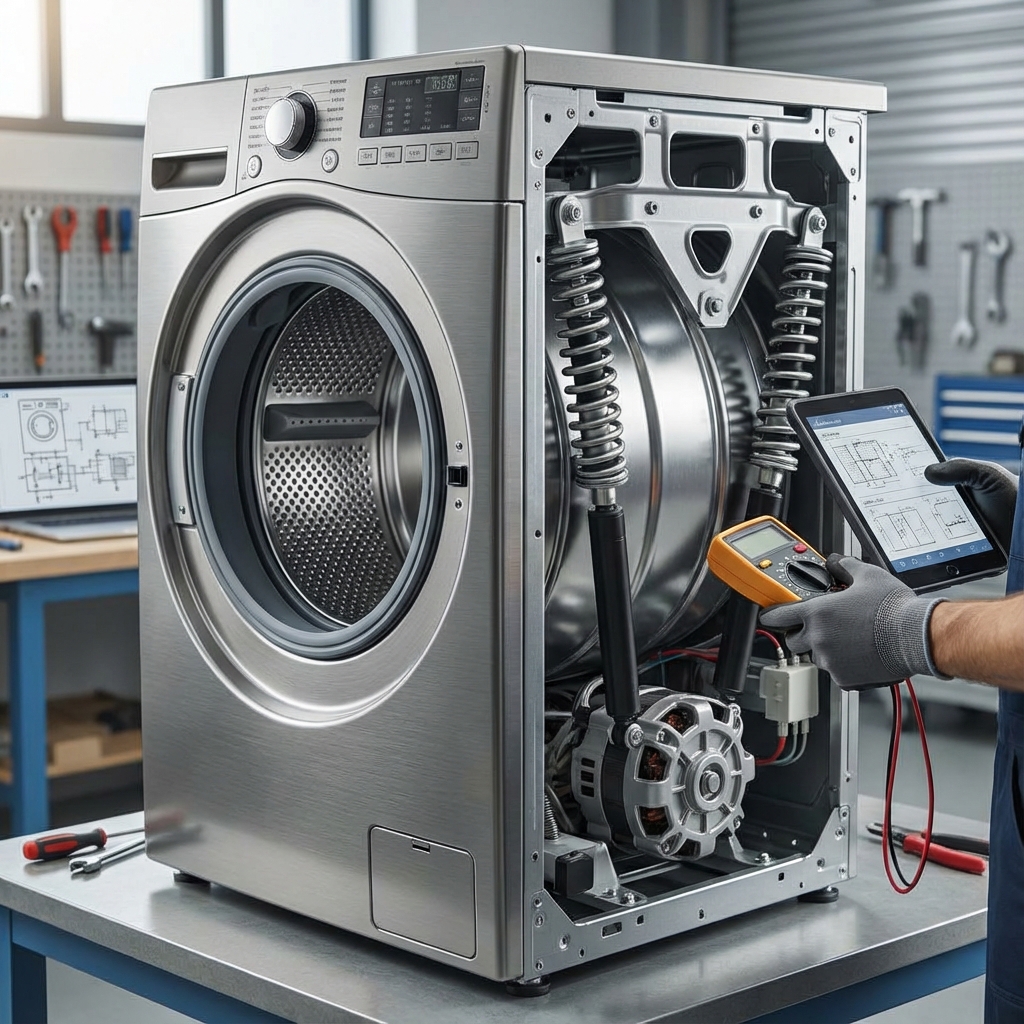
- Suspension system: Supports and dampens spinning motion
- Balance ring: Maintains drum balance during spinning
Control and Safety Systems
Spin cycle operation control:
- Lid switch: Safety switch preventing spinning with open lid
- Door lock: Electronic door locking system (front-load)
- Speed control: Variable spin speed regulation
- Balance sensors: Detect unbalanced loads
- Safety switches: Prevent operation during unsafe conditions
COMMON SPIN CYCLE PROBLEMS
Complete Spin Failure
No spinning action:
- Motor not running: Drive motor failure or electrical issues
- Belt problems: Broken or slipped drive belt
- Clutch failure: Worn or damaged clutch assembly
- Transmission issues: Internal transmission damage
- Control system failure: Electronic control preventing spin cycle
Partial Spin Issues
Inadequate spinning performance:
- Slow spinning: Reduced spin speed affecting water extraction
- Intermittent spinning: Sporadic spin cycle operation
- Weak spin: Insufficient force for proper water removal
- Unbalanced spinning: Excessive vibration during spin cycle
- Incomplete cycles: Spin cycle stopping prematurely
Spin-Related Secondary Problems
Consequences of poor spinning:
- Wet clothes: Inadequate water extraction from fabrics
- Extended drying: Longer dryer cycles and energy waste
- Water damage: Excess water dripping from clothes
- Mold development: Moisture retention in machine and clothes
- Mechanical stress: Additional strain on machine components
Diagnostic Procedures
INITIAL ASSESSMENT
Visual Inspection
Spin system examination:
- Spin cycle observation: Watch machine during spin cycle attempt
- Motor operation: Listen for motor running during spin cycle
- Belt inspection: Check drive belt condition and alignment
- Drum movement: Assess basket spinning action
- Error code review: Check for spin-related error messages
Basic Testing
Preliminary diagnostic steps:
- Manual spin test: Attempt to manually rotate drum
- Load removal: Test spin cycle with empty machine
- Lid/door check: Verify proper lid switch or door lock operation
- Balance test: Check machine level and stability
- Cycle selection: Test different spin speed settings
SYSTEMATIC DIAGNOSIS
Drive System Testing
Motor and transmission evaluation:
- Motor testing: Check drive motor electrical operation
- Belt inspection: Examine belt condition, tension, and alignment
- Transmission testing: Assess transmission operation and condition
- Clutch evaluation: Check clutch engagement and wear
- Coupling inspection: Examine motor coupling (direct drive models)
Control System Diagnosis
Electronic control evaluation:
- Lid switch testing: Verify proper lid switch operation
- Door lock testing: Check electronic door lock function (front-load)
- Control board: Verify spin cycle control programming
- Speed control: Test variable spin speed operation
- Sensor testing: Check balance and safety sensor function
Mechanical System Assessment
Physical component inspection:
- Suspension system: Check suspension springs and dampeners
- Basket mounting: Inspect basket drive and mounting
- Balance system: Evaluate balance ring and weight distribution
- Bearing inspection: Check drum bearing condition
- Alignment verification: Ensure proper component alignment
Professional Spin Cycle Repair Solutions
DRIVE SYSTEM REPAIR
Motor Service and Replacement
Drive motor repair:
- Motor testing: Comprehensive electrical and mechanical testing
- Motor replacement: Install new drive motor when necessary
- Electrical repair: Fix motor wiring and connection issues
- Motor mounting: Proper motor installation and alignment
- Performance testing: Verify motor operation and power output
Belt and Transmission Service
Drive system restoration:
- Belt replacement: Install new drive belt with proper tension
- Transmission repair: Service or replace transmission assembly
- Clutch service: Repair or replace worn clutch components
- Coupling replacement: Install new motor coupling (direct drive)
- Lubrication service: Proper lubrication of moving components
CONTROL SYSTEM REPAIR
Safety Switch Service
Safety system restoration:
- Lid switch replacement: Install new lid switch mechanism
- Door lock repair: Fix or replace electronic door lock system
- Switch calibration: Adjust safety switch operation
- Wiring repair: Restore damaged safety switch wiring
- Safety testing: Verify proper safety system operation
Electronic Control Repair
Control system restoration:
- Control board repair: Fix or replace spin cycle control circuits
- Speed control service: Repair variable speed control system
- Sensor replacement: Install new balance and safety sensors
- Programming update: Update or restore spin cycle programming
- System integration: Ensure proper component communication
MECHANICAL SYSTEM REPAIR
Suspension and Balance Service
Mechanical stability restoration:
- Suspension replacement: Install new springs and dampeners
- Balance system service: Repair or replace balance components
- Basket repair: Fix damaged basket drive or mounting
- Bearing replacement: Install new drum bearings when necessary
- Alignment service: Correct component alignment issues
Structural Repair and Optimization
Complete mechanical restoration:
- Frame stabilization: Repair or reinforce machine frame
- Vibration reduction: Install vibration dampening components
- Level adjustment: Proper machine leveling and stabilization
- Component securing: Ensure all components are properly secured
- Performance optimization: Adjust settings for optimal spin performance
JK Appliances Spin Cycle Repair Service
EXPERT DIAGNOSIS AND REPAIR
Comprehensive Assessment
Professional evaluation:
- Complete system inspection: Thorough spin system evaluation
- Advanced diagnostics: Professional testing equipment and procedures
- Root cause identification: Determine exact cause of spin problems
- Repair planning: Develop comprehensive repair strategy
- Cost estimation: Transparent pricing for all repair options
Professional Repair Benefits
Expert service advantages:
- Experienced technicians: Specialized washing machine spin system expertise
- Quality parts: OEM and high-quality replacement components
- Proper tools: Professional equipment for accurate diagnosis and repair
- Warranty coverage: Comprehensive repair warranties
- Follow-up service: Post-repair support and maintenance
SERVICE COVERAGE
Toronto Area Service
Complete GTA coverage:
- Downtown Toronto: Financial District, Entertainment District
- North York: Willowdale, Don Mills, Thornhill
- Scarborough: Agincourt, Malvern, Rouge
- Etobicoke: Islington, Rexdale, Mimico
- York Region: Markham, Richmond Hill, Vaughan
Emergency Service Options
Urgent spin cycle repair:
- Same-day service: Emergency spin cycle repair available
- Priority scheduling: Urgent repair appointments
- Quick response: Rapid technician dispatch
- Immediate solutions: On-site repair completion when possible
Prevention and Maintenance
REGULAR MAINTENANCE SCHEDULE
Weekly Maintenance
Every-use care:
- Proper loading: Distribute clothes evenly to prevent imbalance
- Load size management: Avoid overloading that strains spin system
- Cycle completion: Allow spin cycles to complete fully
- Machine leveling: Check and maintain proper machine level
Monthly Maintenance
Monthly care tasks:
- Belt inspection: Check drive belt condition and tension
- Drum balance: Test drum balance and stability
- Lid switch testing: Verify proper lid switch operation
- Vibration check: Monitor for excessive vibration during spinning
Annual Professional Service
Yearly maintenance:
- Complete system inspection: Professional spin system evaluation
- Drive system service: Belt, motor, and transmission inspection
- Safety system testing: Comprehensive safety switch testing
- Performance optimization: Adjust and calibrate spin performance
USAGE BEST PRACTICES
Proper Loading Techniques
Spin-friendly practices:
- Even distribution: Distribute clothes evenly around drum
- Appropriate load size: Use correct load size for machine capacity
- Fabric mixing: Mix heavy and light fabrics appropriately
- Pocket checking: Remove items that could cause imbalance
Cycle Selection Optimization
Optimal spin usage:
- Appropriate spin speeds: Select correct spin speed for fabric types
- Cycle matching: Use cycles appropriate for load type
- Balance consideration: Allow machine to balance loads automatically
- Gentle handling: Use gentle cycles for delicate fabrics
Troubleshooting Common Issues
DIY TROUBLESHOOTING STEPS
Basic Spin Checks
User-level diagnosis:
- Load redistribution: Redistribute clothes evenly in drum
- Machine leveling: Check and adjust machine level
- Lid/door check: Ensure proper lid or door closure
- Cycle reset: Power cycle machine to reset spin system
- Load reduction: Try smaller loads to test spin function
Simple Maintenance Solutions
Basic maintenance fixes:
- Belt inspection: Check visible belt condition and alignment
- Drum cleaning: Clean drum and remove any obstructions
- Level adjustment: Adjust machine feet for proper leveling
- Safety switch check: Test lid switch operation manually
- Cycle testing: Test different spin speeds and cycles
WHEN TO CALL PROFESSIONALS
Professional Service Indicators
Signs requiring expert repair:
- Complete spin failure: No spinning action during spin cycle
- Persistent imbalance: Continued imbalance despite proper loading
- Unusual noises: Strange sounds during spin cycle attempts
- Error codes: Persistent spin-related error messages
- Safety concerns: Safety switch or door lock problems
Safety Considerations
Safety-related concerns:
- Electrical issues: Any electrical problems or safety concerns
- Mechanical damage: Visible damage to drive system components
- Excessive vibration: Dangerous vibration levels during operation
- Water damage risk: Wet clothes creating potential water damage
- Warranty protection: Maintaining manufacturer warranty coverage
Cost Considerations and Value
REPAIR COSTS
Typical Repair Expenses
Spin cycle repair pricing:
- Belt replacement: $75-150 for belt and installation
- Lid switch replacement: $50-100 for switch and installation
- Motor repair: $200-400 for motor service or replacement
- Transmission service: $250-500 for transmission repair/replacement
- Control system repair: $150-300 for control board and sensor repairs
Cost vs. Replacement Analysis
Repair decision factors:
- Machine age: Cost-effective for machines under 8 years
- Repair complexity: Simple belt vs. complex transmission issues
- Overall condition: Consider other machine problems
- Performance impact: Effect on overall washing efficiency
LONG-TERM VALUE
Repair Investment Benefits
Professional repair advantages:
- Extended lifespan: 3-5 additional years of reliable service
- Improved performance: Better water extraction and efficiency
- Problem prevention: Reduced risk of future spin cycle issues
- Energy savings: Proper spinning reduces drying time and energy use
- Fabric care: Proper water extraction extends fabric life
Prevention Savings
Maintenance investment:
- Reduced repairs: Regular maintena
Common Questions People Ask
Q: Is it normal for my washing machine not spinning to spinning? expert spin cycle repair toronto? No, this is not normal behavior and indicates an underlying issue that should be addressed promptly to prevent further damage.
Q: Can I fix this washing machine not spinning problem myself? Some basic issues can be resolved with DIY troubleshooting, but complex problems require professional diagnosis to avoid safety risks and warranty issues.
Q: How much does professional washing machine not spinning repair cost in Toronto? Repair costs typically range from $150-$400 depending on the specific issue and parts needed. Our technicians provide free estimates before any work begins.
Q: How long does washing machine not spinning repair take? Most repairs are completed within 1-2 hours during a single visit. Some cases may require ordering specialty parts with a follow-up appointment.
Q: Should I repair or replace my washing machine not spinning? If your washing machine not spinning is less than 8 years old and repair costs are under 50% of replacement cost, repair is usually the better value. Our technicians can help you make the right decision.
Q: Do you offer same-day washing machine not spinning repair in Toronto? Yes! We offer same-day and emergency repair services throughout Toronto and the Greater Toronto Area for urgent issues.
Q: What brands of washing machine not spinning do you repair? We service all major brands including Bosch, Samsung, LG, Whirlpool, KitchenAid, GE, Maytag, Frigidaire, Miele, and more.
Q: Is washing machine not spinning repair covered by warranty? Many washing machine not spinning issues are covered under manufacturer warranty. We can help verify your warranty status and handle claim processing.
nce prevents major failures
- Extended component life: Proper care extends drive system life
- Energy efficiency: Efficient spinning reduces overall energy consumption
- Fabric protection: Proper spinning prevents fabric damage
- Home value: Well-maintained appliances enhance property value
Frequently Asked Questions About Washing Machine Spin Cycle Problems
Q: Why is my washing machine not spinning? A: Washing machines fail to spin due to mechanical, electrical, or control system issues across several categories: Drive system failures include broken or slipped drive belts (most common—belt stretches over time or breaks completely), failed clutch assemblies preventing spin engagement (common in top-load washers), worn motor couplings (direct-drive models like Whirlpool/Kenmore), or complete motor failure preventing any rotation. Safety system problems mean faulty lid switch not signaling "closed" so machine won't spin for safety (top-load), broken door lock mechanism preventing spin cycle (front-load), or tripped thermal protector shutting down motor. Control issues involve failed control boards not sending spin signals, broken timer mechanisms, or malfunctioning speed control modules. Mechanical blockages include stuck brake assembly, seized bearings, or foreign objects jamming drum rotation. Start diagnosis by checking if drum rotates freely by hand when empty (resistance indicates mechanical problem), listening for motor humming without spin (suggests belt/coupling failure), and testing lid/door switch operation.
Q: Can I fix a washing machine that won't spin myself? A: Some spin problems are DIY-fixable while others require professional service. You can handle: Redistributing unbalanced loads causing automatic spin prevention, checking and resetting tripped circuit breakers, testing and replacing simple lid switches (top-load models—typically $15-30 part, two wire connections), adjusting machine leveling to prevent vibration-related spin issues, and cleaning out foreign objects causing mechanical jams. However, professional service required for: Drive belt replacement requiring cabinet disassembly and proper tension adjustment, motor testing and replacement involving electrical diagnostics and heavy component handling, transmission or clutch repairs requiring specialized tools and knowledge, front-load door lock replacement involving electronic programming, and control board diagnosis requiring advanced electrical testing. Safety consideration: washing machines have high-voltage components (120-240V) and heavy mechanical parts—improper repair attempts risk electrocution, injury from moving parts, or causing more expensive damage.
Q: How much does it cost to fix a washing machine spin cycle in Toronto? A: Spin cycle repair costs vary significantly by component failure: Diagnostic fees run $80-120 and are typically waived when proceeding with repair. Simple fixes include lid switch replacement at $50-100, drive belt replacement at $75-150, and motor coupling replacement (direct-drive) at $100-175. Moderate repairs include clutch assembly replacement at $150-250, suspension system repair at $120-200, and door lock replacement (front-load) at $100-175. Major repairs involve drive motor replacement at $200-400, transmission repair or replacement at $250-500, and control board replacement at $150-300. At JK Appliances Toronto, most spin cycle repairs fall in the $100-250 range with same-day service available. We provide transparent upfront pricing after diagnosis, use OEM or high-quality parts, and include warranties on all work. Factor in that proper spin cycle function saves 30-50% dryer energy costs—repair often pays for itself within 6-12 months through reduced drying time.
Q: How often should I check my washing machine's spin cycle? A: Monitor spin performance with every load—immediate attention to declining performance prevents complete failure. Weekly checks include verifying clothes come out appropriately damp (not soaking wet), listening for unusual noises during spin, and observing vibration levels remaining normal. Monthly inspections involve checking visible drive belt condition on models with easy access, testing drum rotation by hand when empty (should spin smoothly), ensuring machine remains level (adjust feet if needed), and verifying lid switch clicks audibly when closed. Professional annual service should include complete drive system inspection (belt, motor, transmission), safety system testing (lid/door switches, locks), bearing condition assessment, suspension system evaluation, and performance optimization. Warning signs requiring immediate professional attention: sudden loss of spinning ability, loud grinding or squealing during spin attempts, machine walking across floor excessively, burning smells from motor area, and error codes related to motor or spin function.
Q: When should I replace my washing machine instead of repairing spin issues? A: Replace rather than repair when: Machine is over 10-12 years old (typical washer lifespan 10-14 years) and major components failing, repair costs exceed 50% of new washer price (for transmission replacement at $400-500, compare to $600-900 new washers), multiple systems failing simultaneously indicating end of useful life, machine suffered catastrophic failure like cracked drum or split outer tub (not economically repairable), energy efficiency is poor (pre-2010 models use 2-3x more water/energy than current ENERGY STAR models), or frequent repairs over past 2 years total more than new appliance cost. However, repair makes sense when: machine under 8 years old with isolated problem, repair costs under $300 for quality washer, machine otherwise performs well, you have high-end brand like Miele or Speed Queen worth investing in, or environmental concerns favor repair over disposal. Example: $175 belt/clutch repair on 5-year-old LG washer is wise; $450 transmission replacement on 11-year-old basic model suggests replacement consideration.
Q: What causes a washing machine to spin slowly or weakly? A: Weak or slow spinning reducing water extraction efficiency stems from multiple causes: Worn drive belt slipping under load rather than breaking completely, providing partial power transmission and reduced spin speed. Failing capacitor on motor (especially in older models) prevents motor from reaching full RPM. Transmission wear causing reduced gear engagement and slower drum rotation. Motor brushes worn down (on brush-type motors) reducing electrical contact and power output. Control board degradation sending incorrect speed signals or failing to ramp up to full spin speed. Heavy loads overwhelming aging drive system components. Brake assembly partially engaged when it should fully release during spin. Bearing wear creating excessive friction slowing drum rotation. To diagnose, test spin cycle with small load (if spins better, drive system weakening), listen for motor speed changes (constant low speed suggests control issue), check for burning smell indicating motor strain, and have professional perform voltage and current testing on motor during operation.
Q: Why does my washing machine spin during some cycles but not others? A: Intermittent spin problems indicate developing failures or cycle-specific issues: Control board partially failing sends spin signals inconsistently—works on some cycles, not others, suggesting failing relay or capacitor on board. Thermal protector on motor trips during longer wash cycles causing overheating, then resets for next cycle appearing intermittent. Lid switch or door lock intermittently making contact—works sometimes based on door position/vibration. Drive belt excessively worn stretches under heavy loads failing to spin but works on light loads or high-speed cycles. Clutch assembly inconsistently engaging due to wear or lubrication issues. Specific cycle programming differences—some cycles intentionally have slower spin or spin options disabled (delicate cycles). Moisture sensor issues on some cycles preventing proper spin initiation. Load-sensing systems malfunction on automatic cycles but manual cycles work. Diagnosis requires testing same cycle repeatedly to identify pattern, trying different cycles with identical loads, and monitoring error codes that may appear intermittently. Intermittent problems worsen over time—address promptly before complete failure.
Q: Is it normal for clothes to be very wet after the spin cycle? A: No, excessive wetness after spin indicates performance problems. Properly functioning spin cycles should leave clothes damp but not dripping—you should be able to wring no more than a few drops from garments. Normal dampness varies by fabric: heavy towels and jeans remain damper than thin cotton shirts, but nothing should be soaking wet. Causes of excessively wet clothes include weak spin speed from belt slippage or motor issues, shortened spin time from control problems, drain issues leaving water in tub during spin (clogged pump, kinked hose), door seal problems allowing water to re-enter during spin (front-load), incorrect cycle selection (delicate cycles have reduced spin), overloading preventing proper water extraction, and unbalanced loads causing early spin termination. Compare wetness levels: if significantly wetter than new machine performance or wetterness increased gradually over time, this indicates developing mechanical problems. Excessive wetness wastes energy (clothes take 30-50% longer to dry), risks water damage from dripping laundry, promotes mildew in clothes and machine, and indicates
spin system requiring service.
Q: Can an unbalanced load prevent the spin cycle from working? A: Yes, absolutely. Modern washing machines have automatic imbalance detection systems that prevent spinning when loads are dangerously unbalanced to protect the machine and prevent walking/damage. Here's how it works: Balance sensors or load distribution detection monitor drum position during spin-up. If the machine detects significant imbalance (all clothes bunched on one side), it stops spin cycle, attempts to redistribute by adding water and agitating, then retries spin cycle—this may repeat 2-3 times. If balance cannot be achieved, machine stops completely leaving clothes wet, or spins at very slow speed insufficient for water extraction. Common causes: single heavy item (comforter) on one side, mixing one heavy item with many light items, washing single large bath mat or rug, clothes tangled into ball, or overloaded machine preventing proper distribution. Solutions: Redistribute clothes manually around drum, separate heavy and light items into different loads, avoid washing single heavy items alone (add towels for balance), load clothes loosely without packing, and ensure machine is level (check with spirit level—adjust feet if needed). Repeated imbalance errors despite proper loading indicate worn suspension system, failed balance sensor, or control board issues requiring professional service.
Q: What does it mean if the washing machine motor hums but doesn't spin? A: Motor humming without drum rotation indicates motor receives power and attempts operation but mechanical connection to drum is broken or jammed. Top-load washers: This classic symptom usually means broken drive belt (motor runs but doesn't transfer power to transmission), failed motor coupling (direct-drive models like Whirlpool/Kenmore—plastic coupling between motor and transmission breaks), seized transmission preventing drum movement despite motor running, or stuck clutch assembly not engaging spin cycle. Front-load washers: Drive belt broken or off pulleys, motor pulley loosened on motor shaft, drum bearing completely seized creating too much resistance for motor, or foreign object (coin, wire, small clothing item) jammed between inner drum and outer tub. Diagnosis steps: disconnect power for safety, remove access panel to view drive system, manually try rotating drum (should turn freely if belt/coupling broken, won't budge if jammed/seized), inspect belt for breaks or slippage, check motor coupling if direct-drive. This problem requires professional repair—continuing to run machine risks burning out motor from strain.
Q: How do I know if my washing machine's drive belt is broken? A: Identify broken drive belts through these signs: Complete loss of spin function but washer fills and drains normally (motor may hum during spin attempt but drum doesn't move). Ability to freely rotate drum by hand in both directions with no resistance (working belt provides slight resistance). Visual inspection on models with easy access shows belt obviously broken, hanging loosely, or completely missing from pulleys. Burning rubber smell before failure from belt slipping excessively before breaking. Intermittent spinning before complete failure as belt slipped progressively worse. To check: unplug washer, remove access panel (location varies: rear panel on front-loaders, under cabinet on some top-loaders), visually inspect belt on pulleys connecting motor to drum/transmission. Working belts should be: properly seated in pulley grooves, showing appropriate tension (slight deflection when pressed), no cracks, fraying, or glazing on surface. Belt replacement is moderate DIY on some models but requires proper tension adjustment—improper tension causes premature failure. Professional belt replacement costs $75-150 including quality belt and ensures proper installation, alignment, and tension for long service life.
Q: Can a bad lid switch prevent spinning but allow washing? A: Yes, this is a common failure pattern. Lid switches are safety devices preventing spin cycle operation with lid open (to prevent injury from exposed spinning basket) but allow washing/agitating because slow agitation speeds are safe. How lid switch operation works: During wash cycle, switch allows operation regardless of position on many models. During spin cycle, switch must signal "lid closed" or machine won't engage high-speed spinning. Failed lid switch symptoms: Washer fills, agitates, drains normally but refuses to spike or spins very slowly. No error codes displayed on many models. Machine works perfectly except spin cycle. Clicking sound from lid switch area when closing lid may disappear (no click = likely bad switch). Testing lid switch: Open lid during operation—washer should stop immediately (if continues, switch definitely bad). With lid closed, manually press switch button with fingernail or screwdriver—if spin initiates, switch isn't being activated by lid. On models with electronic controls, lid switch failure may show error code. Lid switch replacement is straightforward DIY ($15-30 part on most models, two wire connections, accessed under top panel or inside cabinet near lid). However, front-load washers use electronic door locks rather than simple switches—these require professional replacement and programming ($100-175 installed).
Related Articles
- Washing Machine Not Draining? Expert Repair Solutions Toronto
- Washing Machine Not Agitating? Expert Agitator Repair Toronto
- Washing Machine Vibrating Excessively? Expert Vibration Repair Toronto
- Washing Machine Noise Problems? Expert Noise Repair Toronto
- Washing Machine Cycle Issues? Expert Cycle Repair Toronto
Washing machine not spinning in Toronto? Contact JK Appliances at +1 647-560-8966 for expert spin cycle repair service. Same-day service available for urgent spinning problems.
Expert Tips & Pro Insights
💡 Pro Tip: Regular maintenance can prevent 80% of appliance problems. Follow manufacturer guidelines for cleaning and care.
⚠️ Safety Warning: Always disconnect power before attempting any repairs or inspections. If you smell gas, evacuate immediately and call emergency services.
🔧 Technician Insight: Many issues that seem complex often have simple solutions. Start with basic troubleshooting before assuming the worst.
📞 When to Call a Professional: If you encounter electrical components, gas lines, refrigerant systems, or if basic troubleshooting doesn't resolve the issue, it's time to call an expert.